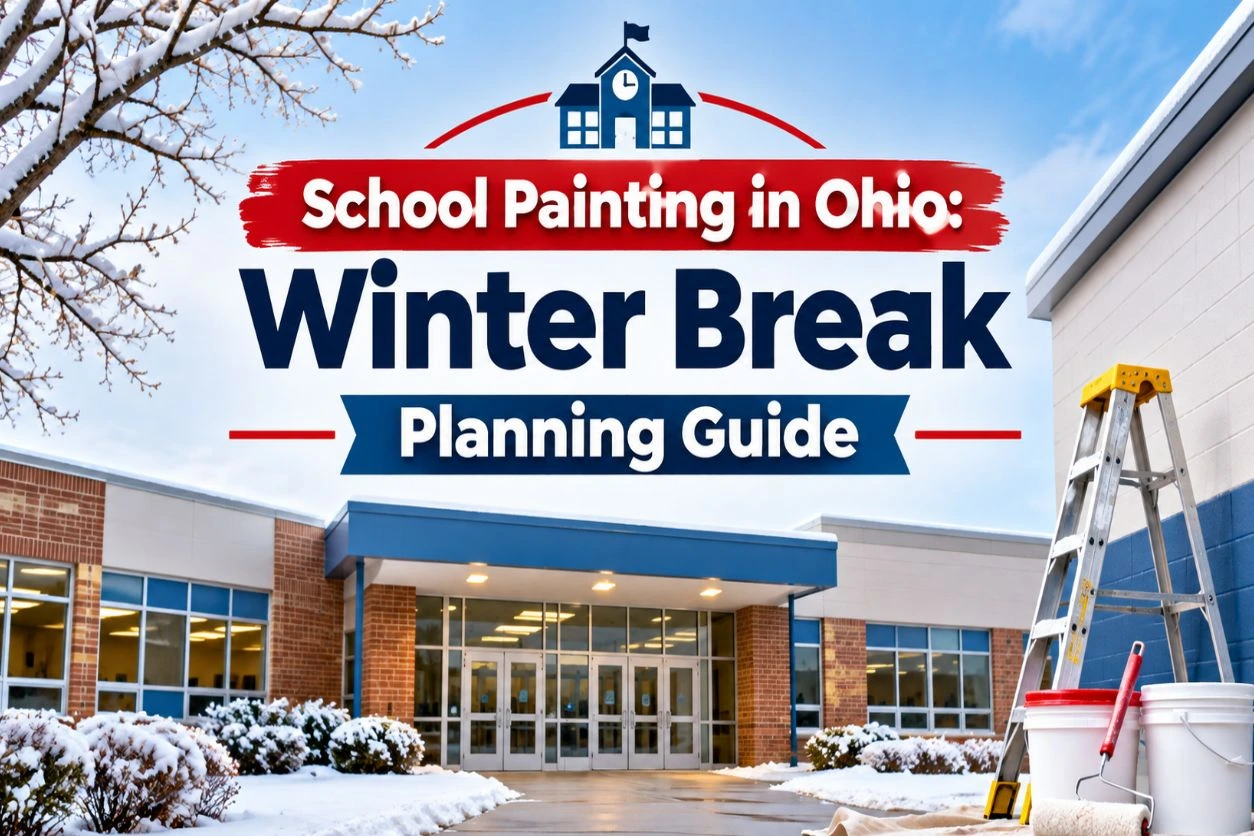
Winter break is a valuable opportunity for schools to take care of building improvements that are difficult to schedule during the academic year. With fewer students in classrooms and less activity in hallways, facility managers may have a chance to address worn walls, faded finishes, and long-overdue painting projects.
But the holiday break is shorter than it looks on the calendar.
Between staff schedules, building closures, winter weather, and the time needed for paint to dry, even a relatively small project requires careful planning.
For administrators considering school painting in Ohio, the goal should be more than refreshing the appearance of a building. It’s about selecting suitable materials, protecting indoor air quality, and having classrooms ready when students return.
Here’s how schools throughout Northwest Ohio can approach winter-break painting without unnecessary surprises.
Is Winter Break a Good Time for School Painting in Ohio?
Yes. Winter break can be a practical time for school interior painting because many classrooms and common areas are unoccupied. However, the success of the project depends on the available workdays, building conditions, paint selection, ventilation, and the amount of preparation required.
A short break may be suitable for repainting selected classrooms, administrative offices, or smaller corridors. Larger projects may need additional time or a phased schedule.
According to the U.S. Environmental Protection Agency’s school indoor air quality guidance, renovation activities should be scheduled during unoccupied periods or times of lower occupancy whenever possible.
This helps reduce unnecessary exposure to dust and emissions from building improvement work.
For facilities planning improvements, professional commercial painting services in Ohio can help address surface preparation, coating selection, and painting requirements.
Which School Areas Should Be Painted During Winter Break?
When time is limited, attempting to repaint an entire school may not be realistic.
A better approach is to prioritize rooms according to their condition, usage, and accessibility.
Classrooms and Learning Spaces
Classroom walls experience daily contact with desks, chairs, backpacks, and other materials.
Scuffed surfaces, damaged drywall, and fading paint can make a room look worn even when everything else is well maintained.
Winter break may provide an opportunity to repaint selected classrooms without interrupting lessons.
Before work begins, identify furniture and teaching equipment that must be protected or temporarily relocated.
Hallways and High-Traffic Areas
Hallways often show signs of wear sooner than other school spaces.
Locker areas, stairwells, entrances, and corridors experience frequent contact throughout the school day.
These surfaces may benefit from durable, washable coatings suited to regular cleaning.
However, hallways also provide access to other parts of the building. Painting should be coordinated so necessary routes remain available and emergency access requirements are maintained.
Offices, Libraries, and Common Areas
Administrative offices, libraries, and meeting rooms may be easier to schedule during holiday closures.
Cafeterias and gymnasiums can also be considered, but their size, existing conditions, and equipment-access requirements may make them more complicated.
| School area | Winter painting consideration |
|---|---|
| Classrooms | Furniture protection and reopening schedule |
| Hallways | Access restrictions and durable coatings |
| Administrative offices | Workstation protection and staff access |
| Libraries | Protection of books, shelving, and electronics |
| Cafeterias | Cleaning requirements and surface condition |
| Gymnasiums | Ceiling height and specialized access |
Prioritizing the most important spaces can produce useful improvements without stretching a short holiday schedule too far.
How Does Ohio’s Winter Weather Affect Interior Painting?
Cold outdoor weather doesn’t automatically prevent interior painting.
However, maintaining suitable indoor conditions is essential.
Indoor Temperature and Paint Application
Paint manufacturers specify acceptable application temperatures for their products.
These requirements may apply to the room air, the surface being painted, and the coating material itself.
Even when a building’s heating system is operating, surfaces near exterior walls and poorly insulated areas may be colder than the surrounding air.
According to Sherwin-Williams’ surface preparation guidance, temperature, surface condition, and proper preparation are important factors in successful coating application.
Facility managers should confirm that the selected product’s conditions can be maintained throughout application and the required drying or curing period.
Humidity, Ventilation, and Drying Time
Paint drying can be affected by temperature, humidity, airflow, and coating thickness.
A heated room doesn’t necessarily guarantee that a painted surface is ready for use.
One common mistake is assuming that paint is fully ready simply because it feels dry to the touch.
Schools should follow the manufacturer’s instructions for recoating, curing, cleaning, and returning a room to normal service.
For a broader explanation of painting schedules and occupied-building work, see our article on commercial interior painting costs and downtime.
What Paint Is Best for School Classrooms and Hallways?
There isn’t one paint product that works best in every school.
A classroom, cafeteria, office, and busy corridor may need different finishes depending on their daily use.
Choose Coatings That Are Easy to Maintain
High-contact walls may benefit from products with good scrub resistance and cleanability.
Lower-traffic areas may have different priorities, including appearance and light reflection.
Paint sheen is worth considering, but it’s not the only factor affecting durability.
Modern products can offer different levels of performance even within the same sheen category.
Compare technical data and maintenance instructions before selecting a coating.
Our complete commercial painting guide provides additional information about commercial coating choices and surface requirements.
Consider Lower-Emitting Products
Indoor air quality is especially important in educational buildings.
The EPA recommends evaluating the emissions, composition, and performance of paints and other finishing materials.
Its guidance on controlling indoor pollutants in schools explains that low-VOC and zero-VOC products can reduce some sources of indoor pollution, but they may still release undesirable compounds.
Low-VOC paint should never be treated as a replacement for proper ventilation or safe work scheduling.
Product selection should consider both emissions and durability, rather than relying on marketing labels alone.
How Can Schools Protect Indoor Air Quality During Painting?
Even when students are away, painters, maintenance employees, administrators, and other workers may still be inside the building.
Painting and surface preparation can introduce airborne dust, odors, and chemical emissions.
The EPA’s school construction and ventilation guidance identifies painting as an activity that may require additional ventilation, including when low-VOC products are used.
Before starting work, schools should consider how to isolate painting areas, protect furnishings, control dust, and prevent contaminants from spreading through shared ventilation systems.
The building’s ventilation strategy must also account for winter temperatures. Simply opening classroom windows may not provide adequate contaminant removal.
A proper plan should consider the HVAC system, suitable exhaust ventilation, outdoor air conditions, and the selected coating’s requirements.
When Can Students Return to Painted Classrooms?
There is no single reentry time appropriate for every painting product or school.
The return schedule should account for curing requirements, continued ventilation, cleaning, and the facility’s safety procedures.
The EPA’s construction guidance includes recommendations for supplemental ventilation after installing materials that emit indoor pollutants.
This is one reason painting should not be scheduled right up to the moment students return.
Allowing time for inspection and ventilation can help prevent last-minute complications.
What Should Older Ohio Schools Check Before Repainting?
Older educational buildings may have existing coatings that require special attention.
Some surfaces could contain lead-based paint, particularly in buildings constructed before 1978.
The EPA’s Renovation, Repair and Painting Rule guidance explains that certain pre-1978 child-occupied facilities are covered when renovation work disturbs painted surfaces.
These can include qualifying preschool and kindergarten areas, although the rule does not automatically apply to every room in every school.
Where applicable, certified firms must follow the required lead-safe renovation procedures.
Before scraping, sanding, or removing older painted materials, administrators should determine whether testing, containment, or specialized procedures are needed.
Older buildings may also contain historic architectural features that deserve additional consideration.
For renovation work involving original building materials, explore historic restoration services in Ohio.
How Should Schools Schedule Painting During Winter Break?
The most effective approach is to establish a realistic scope before the holiday begins.
That means deciding which rooms will be painted, what repairs are necessary, and how long each area will be unavailable.
Start With a Building Walkthrough
A walkthrough helps identify peeling paint, cracks, moisture damage, difficult access, and areas requiring more preparation.
It also creates an opportunity to discuss product selection, equipment protection, and the number of coats needed.
Coordinate Work With Other Maintenance Projects
Winter break may also be used for flooring repairs, lighting upgrades, equipment servicing, or other building improvements.
If these activities aren’t coordinated, one project may interfere with another.
For example, overhead electrical work completed after wall painting could create additional touch-up requirements.
Our guide to planning a commercial renovation project explains how scheduling and communication can help prevent such issues.
Reserve Time for Cleanup and Inspection
The final day of painting shouldn’t automatically become the reopening date.
Allow sufficient time to inspect finishes, complete necessary touch-ups, remove protective materials, clean work areas, and confirm the rooms are ready for normal use.
A practical winter-break plan should leave some flexibility for unexpected repairs or material delays.
What Should a School Painting Estimate Include?
School administrators should compare detailed proposals rather than choosing solely by the total quoted price.
A clear painting estimate should explain the project scope, materials, surface preparation, and schedule.
Important items to confirm include:
- The classrooms, hallways, and other surfaces included
- Required drywall repairs, cleaning, sanding, and priming
- Paint products, finishes, and number of coats
- Furniture, equipment, and flooring protection
- Ventilation and applicable safety procedures
- Working hours, building access, and project phases
- Cleanup, inspections, and final handover responsibilities
School districts may also have purchasing procedures, insurance requirements, personnel access rules, or background-check policies that contractors must satisfy.
Before selecting a contractor, review our 10 questions to ask before hiring a painting contractor.
A detailed written agreement can help everyone understand what work will be completed before students return.
Frequently Asked Questions
Can School Interiors Be Painted Safely During Winter?
Yes, when suitable indoor conditions, product selection, ventilation, and safety procedures are maintained. Cold weather alone does not prevent interior painting.
Can an Entire School Be Painted During Winter Break?
Possibly, but it depends on building size, crew capacity, surface conditions, and the length of the break. Targeted painting or phased projects may be more realistic for larger facilities.
Does Low-VOC Paint Mean Students Can Return Immediately?
No. Low-VOC coatings can still emit substances, and application and curing requirements vary. Follow manufacturer instructions and the school’s indoor air quality procedures before reopening.
Should Schools Paint Hallways Before Classrooms?
Not always. The best sequence depends on building access, required routes, occupancy, and the amount of preparation each area needs.
Is It Better to Repaint or Touch Up Classroom Walls?
Localized touch-ups may be appropriate when the existing coating remains in good condition. Widespread wear, damaged surfaces, or noticeable color differences may justify repainting the entire wall.
Conclusion: Prepare Your School for a Fresh Start
Winter break can be a useful time to improve the appearance and condition of school interiors, but successful painting starts with realistic planning.
Choosing suitable coatings, protecting indoor air quality, coordinating building access, and leaving enough time before reopening are all essential considerations.
For educational facilities in Tiffin and Northwest Ohio, a carefully planned painting project can help minimize unnecessary disruption while addressing worn and damaged surfaces.
Five Star Maintenance & Construction provides commercial painting and general contracting services throughout Northwest Ohio.
Learn more about our company by visiting our team page and exploring our project gallery.
If you’re considering a winter-break painting project, contact Five Star Maintenance & Construction to discuss the scope, schedule, and whether the project fits our current services.
A fresh start for students begins with a school that’s properly prepared to welcome them back.