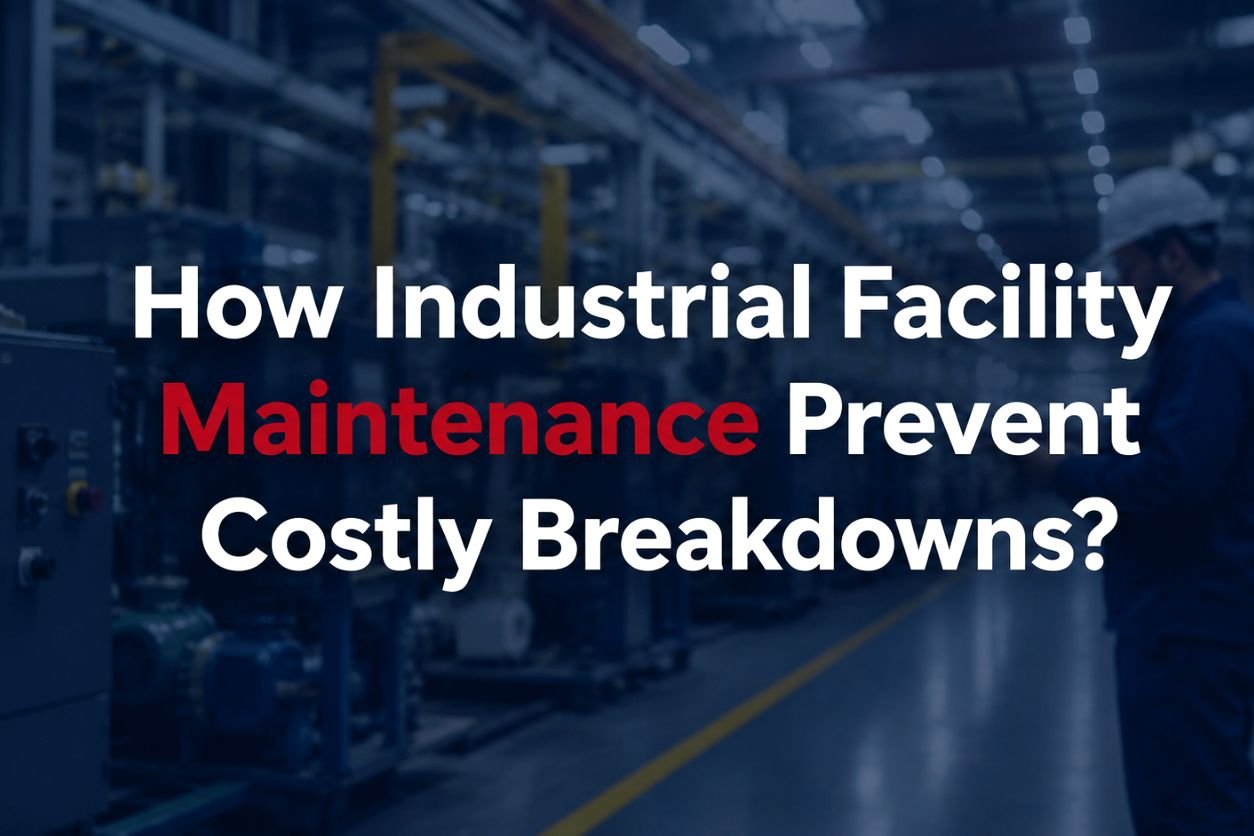
Preventive maintenance is a proactive strategy that helps industrial facilities avoid unplanned equipment breakdowns and expensive downtime. Preventive maintenance focuses on routine inspections, servicing, and early identification of potential problems rather than responding to malfunctions. Businesses are increasingly investing in preventive maintenance solutions that keep buildings, systems, and equipment running well all year long rather than responding to issues after they arise.
The Importance of Industrial Facility Maintenance
Proactive maintenance reduces expenses, boosts productivity, lowers stress levels, and may even promote future innovation by gathering data that pinpoints pain points in production processes. Let’s talk in detail:
Efficiency: Disruptions to production are expensive. Preventive maintenance can be carried out at off-peak production hours or during downtime. Additionally, well-maintained equipment may assist in guaranteeing adherence to business quality and safety requirements as well as industry norms and standards. Strict maintenance plans facilitate the management of budgets and schedules.
Expense: Maintaining assets on a regular basis prolongs their lifespan and reduces the expense of emergency or replacement repairs. Predictive analysis is used to optimize maintenance, which lowers maintenance costs by being done just when needed rather than on a timetable.
Security: Unexpected mechanical breakdown can be hazardous. Accidents are avoided by taking preventive action. In addition to reducing possible ownership responsibility for workplace mishaps, well-maintained equipment increases worker confidence and, consequently, worker productivity.
Tips for Maintaining Industrial Facilities
Maintaining industrial facilities properly is important to long-term production, safety, and efficiency. A carefully considered maintenance plan lowers expenses, keeps systems operating at peak efficiency, and helps avoid unplanned downtime. Here are a few industrial facility maintenance tips you need to know:
Educate Maintenance Personnel
Effective facility maintenance depends on having maintenance personnel with the necessary training. Putting money into training guarantees that your staff is up to date on the newest equipment handling, safety protocols, and maintenance practices. Frequent training updates increase the overall effectiveness of your maintenance program and lower the possibility of human error by keeping your employees up to date on new technology and best practices.
Keep Detailed Maintenance Records
Maintaining accurate records of all maintenance operations is important to monitoring the condition of your systems and equipment. You can track when maintenance was last done, see trends in equipment problems, and plan upcoming chores with the help of thorough data.
Create a Schedule for Preventive Maintenance
Any good maintenance program starts with the creation of a preventative maintenance schedule. It guarantees that regular service and inspections are carried out at regular intervals to reduce unplanned malfunctions and save on expensive repairs.
Perform Regular Inspections
Conducting periodic inspections to help identify any issues early on is one of the most important pieces of maintenance advice for industrial facilities. Infrastructure, electrical systems, and machinery may all be routinely inspected to find wear and tear or problems that, if ignored, could require expensive repairs.
The Real Cost of Equipment Failures
When equipment malfunctions, many firms solely consider the cost of repairs. In reality, the cost of the repair is frequently the lowest. Usually, the higher expenses consist of:
- Missed delivery deadlines
- Production downtime
- Overtime work
- Possible risks to safety
- Fees for emergency repairs
- Customer discontent
- Customer discontent
- Inventory lost
Consider a conveyor system malfunctioning during the height of production. In addition to the equipment needing repairs, there’s a chance that workers will be left waiting, shipments will be delayed, and contractual deadlines will be missed. The real cost of repairs may soon be surpassed by these indirect expenditures. Preventive maintenance greatly lowers the probability of these circumstances by spotting worn components, loose connections, leaks, or mechanical problems before they lead to total failure.
Choosing the Right Maintenance Partner
Careful planning, technical expertise, and experience are necessary for effective maintenance. A professional maintenance provider creates specialized maintenance plans depending on the facility’s equipment, working hours, and production demands since they are aware of how various building systems interact.
Experienced providers concentrate on avoiding issues before they have an impact on business operations rather than providing one-size-fits-all solutions. The top maintenance partners additionally offer thorough inspections, open reporting, prompt repairs, and suggestions that assist companies in making well-informed choices regarding upkeep and capital upgrades.
Summing Up!
Expensive equipment failures are rarely unplanned. They are usually caused by little problems that were ignored or put off until they became significant failures. Businesses may detect these issues early, minimize downtime, increase safety, prolong equipment life, save operating costs, and maintain steady output by investing in industrial facility maintenance.
We at Five Star Maintenance & Construction recognize how critical it is to maintain the efficient operation of your industrial plant. With years of expertise, our staff is dedicated to providing professional and regular preventative maintenance to guarantee your equipment runs smoothly and effectively. Call us at (419) 443-0414 to book your slot!