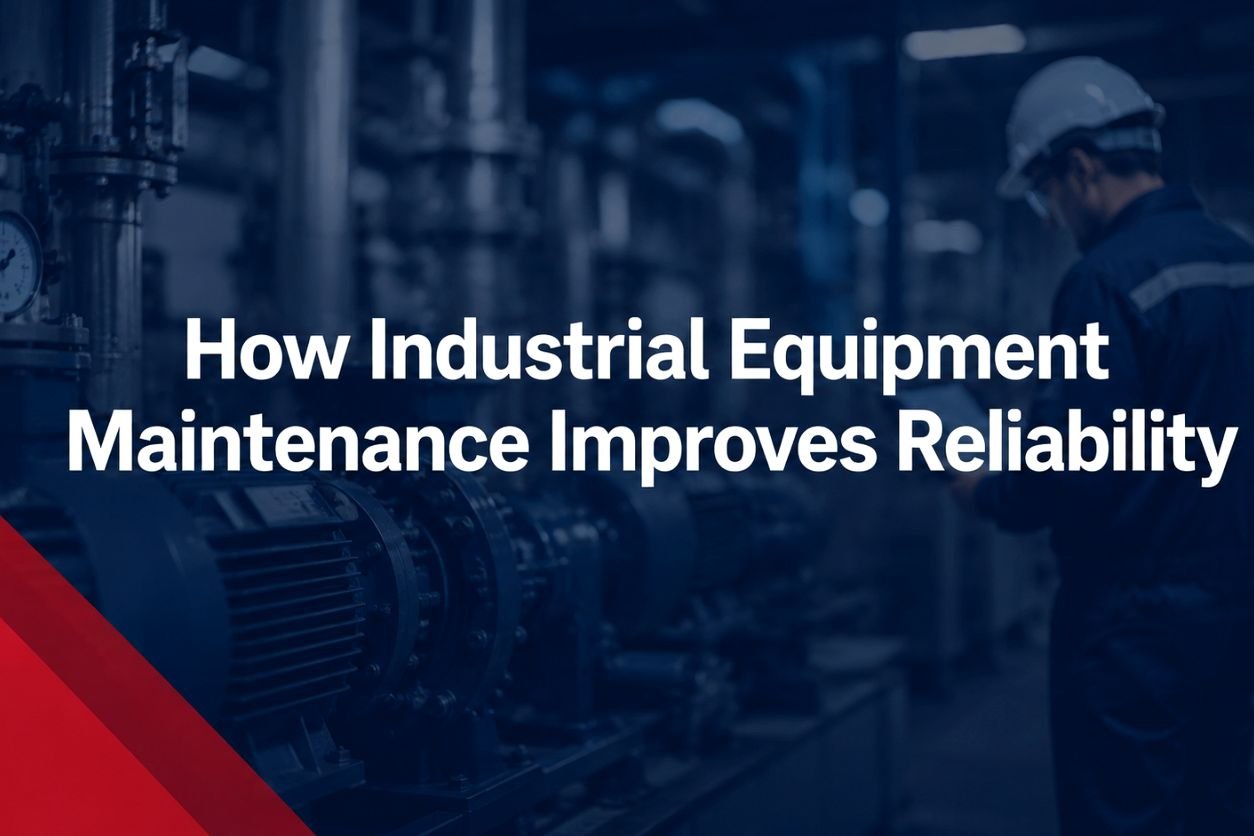
Industrial equipment is the foundation of every manufacturing plant, warehouse, or production facility. Every piece of equipment, from compressors and conveyor systems to HVAC units and CNC machines, is essential to maintaining operations. Sadly, equipment cannot maintain optimal performance on its own. Performance is gradually impacted by regular wear & tear, daily use, and environmental factors. Businesses may optimize the lifespan of critical assets, minimize unplanned failures, and keep their equipment running effectively by implementing a proactive maintenance approach.
Why Equipment Reliability Matters?
Equipment that is reliable does more than just maintain productivity. It helps firms maintain consistent quality, fulfill client deadlines, and prevent high costs. When machinery functions as planned, personnel can focus on production rather than dealing with repeated problems. Customers receive their orders promptly, inventory flows effectively, and production schedules stay on track.
However, faulty technology leads to doubt. Unexpected failures typically interrupt operations, raise labor costs, delay shipments, and drive maintenance teams into emergency repairs. Reliability over the long run doesn’t just happen. It’s the product of persistent equipment maintenance, frequent inspections, and a commitment to preventing issues before they grow.
Preventive Maintenance Cuts Down on Unexpected Downtime
One of the primary advantages of industrial equipment maintenance is decreasing unplanned downtime. Unusual vibrations, excessive heat, odd sounds, decreased performance, or fluid leaks are common warning indicators for machines. These early warning signs give maintenance crews a chance to fix issues before a full breakdown happens.
Early detection of these problems is facilitated by routine inspections. Shutting down production to fix broken equipment is significantly more disruptive than replacing a worn belt, tightening loose connections, or lubricating moving parts during planned maintenance. Preventive maintenance helps organizations to arrange repairs during planned downtime rather than dealing with costly emergency scenarios.
Here’s how you can benefit from industrial maintenance:
Extending Equipment Lifespan
Industrial machinery constitutes a major financial investment. Since significant equipment replacements cost a lot of money, it’s critical to extend the life of each asset. Regular maintenance helps prevent wear and tear by keeping components clean, properly greased, and perfectly adjusted. For instance, timely filter replacement keeps impurities from harming internal parts. Periodic calibration guarantees that equipment continues to function within its intended parameters, while routine lubrication reduces friction between moving parts.
Even while these straightforward maintenance tasks might not seem like much, when combined, they significantly extend the life of equipment.
Improving Operational Efficiency
Regular maintenance improves the performance of equipment. When a machine is running at its best, it uses less energy, produces consistent results, and needs fewer changes during production. Equipment is forced to work harder than necessary by worn bearings, clogged cooling systems, dirty filters, and misaligned parts. This additional strain lowers productivity and raises energy usage.
Regular maintenance helps facilities maintain consistent output without needless disruptions and restores equipment functionality. Over time, even little efficiency gains might result in large cost savings, particularly for establishments that run around the clock or in several shifts.
Sustaining Reliable Product Quality
Product quality is directly impacted by the state of the equipment. Inconsistent results from out-of-calibration or inefficiently performing machines might lead to damaged goods, greater waste, or complaints from customers. Maintaining exact operational standards is ensured by periodic calibration and inspections. Equipment that is properly maintained produces more consistent outcomes when it comes to temperature management, pressure settings, cutting precision, and production speed. This uniformity lowers material waste and rework expenses while increasing client satisfaction.
Cutting Repair Expenses
The cost of emergency repairs is nearly always higher than that of scheduled maintenance. Businesses frequently deal with urgent repair calls, extra work, expedited delivery for new components, and production delays when equipment fails suddenly. Preventive maintenance lowers these expenses by spotting issues before they become emergencies. For instance, it is significantly less expensive to replace a worn bearing during a planned checkup than it is to replace an entire motor that has been damaged by a bearing failure.
Final Say!
Reliable equipment is one of the most significant things any industrial business can have. It promotes consistent production, improves worker safety, saves operational costs, and helps organizations achieve consumer expectations without needless disruptions. Businesses may prolong the life of costly equipment while drastically reducing downtime through routine inspections, preventative service, prompt repairs, and continuous monitoring.
Reach out to experts at Five Star Maintenance & Construction for the maintenance of your industrial equipment. Ring us at (419) 443-0414 to book your appointment.