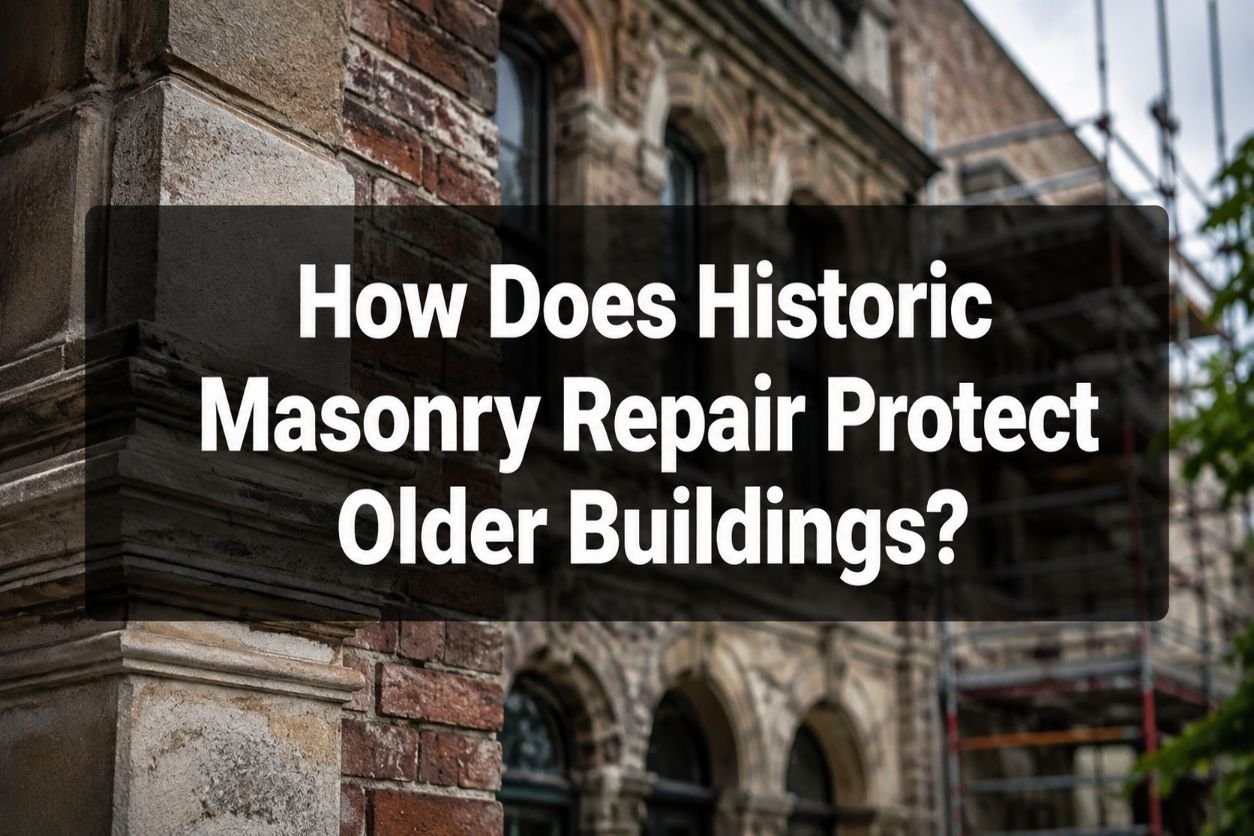
Newer construction usually lacks the charm of older buildings. Masonry is a key component of what makes old buildings unique, from intricate stone facades to well-constructed chimneys. Brick, stone, and mortar can be gradually impacted by years of rain, snow, freezing temperatures, dampness, and natural movement. Repairing ancient masonry in Ohio calls for far more than just patching cracks and swapping out broken components. The goal is to comprehend how the original masonry was constructed and carry out repairs that preserve the building’s historic character.
How Masonry Deterioration May Endanger Older Structures
When its separate parts are allowed to function as intended, historic masonry frequently endures for generations. Even sturdy brick and stone can start to deteriorate when moisture, unsuitable repairs, or ignored upkeep interfere with that system.
Damage from Water Can Go Well Beyond the Surface
One of the main dangers to old masonry is water. Cracked mortar joints, deteriorating sealant, defective flashing, and openings around windows and other architectural elements are all potential entry points for rain. Moisture may have an impact on nearby brickwork, interior finishes, and structural elements once it penetrates the outer layer.
Finding the source of water intrusion and fixing it is the first step in expert historic masonry restoration in Ohio. If the visible area is repaired without addressing the moisture source, the issue may recur.
Delaying Repairs May Result in More Extensive Restoration Work
When historic masonry issues are neglected, they often grow more severe. Water may seep into the wall due to a little patch of missing mortar. Over time, such moisture may cause internal degradation, discoloration, broken bricks, or bigger sections that need to be repaired. More of the ancient structure can be preserved with early intervention. Additionally, it allows property owners to deal with issues in a planned way instead of reacting to an immediate structural or water-related issue.
The Masonry System May Be Weakened by Deteriorating Mortar
In addition to helping the wall control moisture and movement, mortar is crucial for keeping masonry units together. Historic mortar weathers naturally over time. In the joints between bricks and stones, it might become mushy, fractured, sunken, or absent. This process, which is sometimes referred to as mortar degradation, increases the surrounding masonry’s exposure to water and may eventually compromise the structure of the wall.
A certified Ohio historic building restoration contractor is aware of the need to assess current materials prior to choosing a repair technique.
Incompatible Previous Repairs May Lead to New Issues
Over the course of their existence, several historic structures have undergone multiple repairs. Unfortunately, earlier fixes aren’t always consistent with the initial design. The way historic masonry manages moisture can be changed by waterproof coatings, modern sealants, or improper replacement materials. Effective building restoration in Ohio includes assessing previous repairs to see if they are preventing more damage or preserving the property.
Cracked or Damaged Masonry Might Indicate More Serious Problems
Cracks should never be disregarded just because a structure is old, even though not every crack indicates a significant structural issue. Some could arise as a result of regular material movement or settling. Others may be related to rusting embedded metal, foundation movement, dampness, or stress caused by structural alterations over time.
What Should be the Main Focus of Historic Masonry Repair?
Making an old structure appear brand new is not the goal of restoration. A well-considered project respects the materials and skills that give it historical worth while preserving its condition and functionality.
Fix the Root Cause, Not Just the Exterior Damage
A successful repair takes care of the initial cause of the masonry’s deterioration. Repairing the brick by itself won’t offer long-term protection if moisture is getting in through a broken gutter or roof feature. Before beginning cosmetic restoration, it is important to determine whether structural movement is causing recurrent fractures.
Create a Plan for Long-Term Maintenance
Masonry repair works best when it is followed by continuing maintenance. Frequent inspections can spot early indicators of surface degradation, cracking, water penetration, and mortar deterioration. The quantity of moisture that reaches masonry walls may also be decreased by maintaining gutters, downspouts, roof drainage, and flashing. Even though they might not appear directly related to restoration, little maintenance actions are crucial for protecting finished repairs.
Summing Up!
Older buildings’ strength, character, and architectural worth are largely attributed to historic masonry. However, because brick, stone, and mortar are subjected to weather and climatic stress for decades, careful maintenance is crucial. Expert ancient masonry restoration in Ohio assists in resolving issues before they endanger more substantial sections of the building.
If you wish to protect an older building, historic masonry repair by our experts at Five Star Maintenance & Construction is all you need. Call us at (419) 443-0414 to book your appointment!