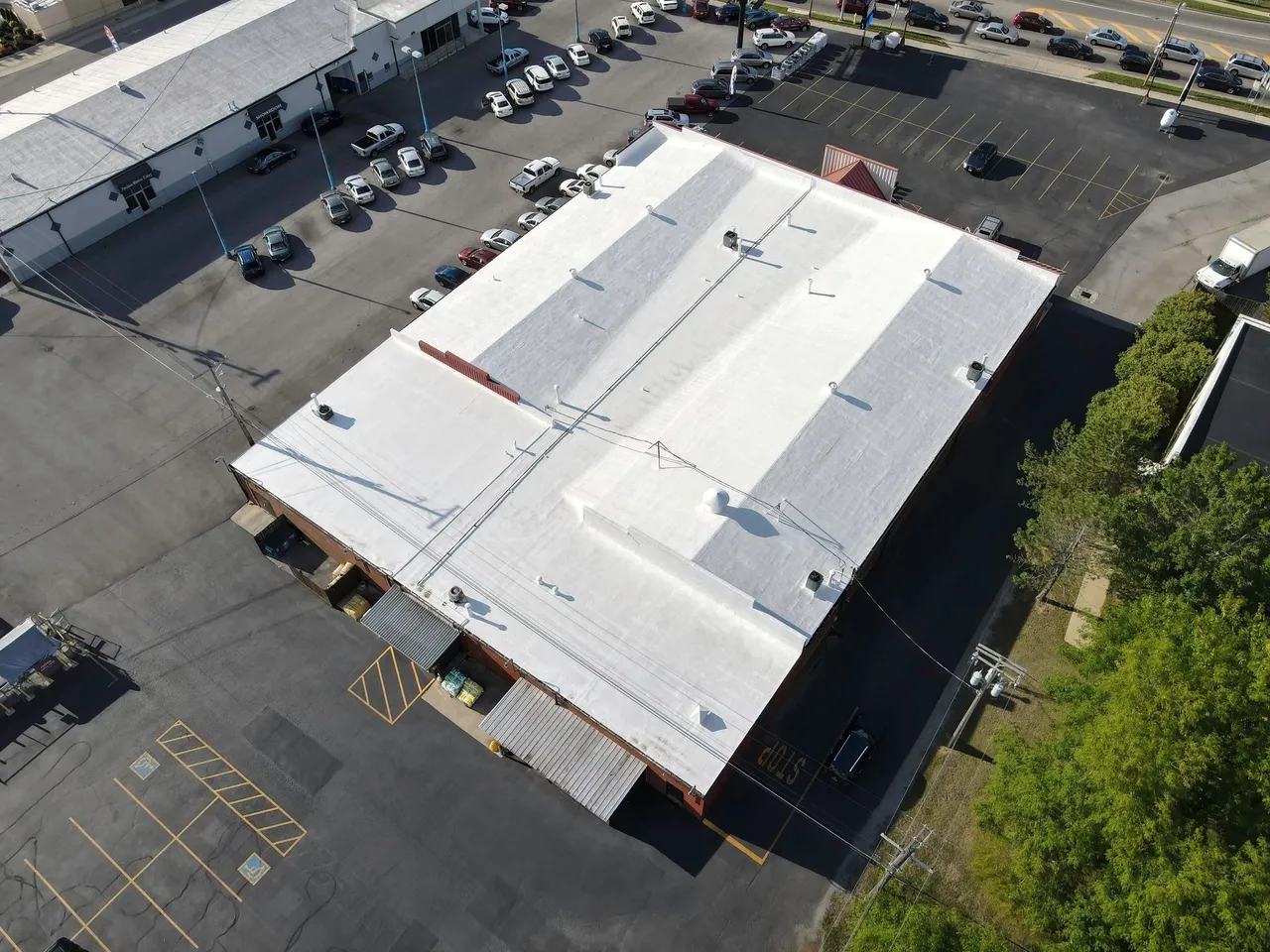
Seamless Sprayed Roofing Membrane (SPRM) has been used as a roofing and insulation material for over 45 years. During this time, roofing systems have proven themselves through comprehensive, independent studies to be dependable, long-lasting, and affordable.
A great example would be the New Orleans Super Dome with the SPRM Roof installed in 1975. This was used as a temporary residence for thousands during Hurricane Katrina. It was one of the few buildings in the area with the roof still intact.
- Seamless: SPRM is applied as a liquid, creating a single monolithic membrane that covers the entire roof. Chemically bonded to the substrate prevents water between the old and new roofs. There are no seams or joints, the source of most leaks in traditional roofs.
- Flexible: The SPRM can be sprayed onto virtually any surface, irregularly shaped roofs and protrusions are readily taken care of.
- Lightweight: SPRM roofing typically weighs around 1/2 lbs. per square foot, versus 8 lbs. for a built-up roof and 10 lbs. for ballasted single-ply roofs.
- Thermal Insulation: SPRM has the best insulating properties available for commercial construction today. Reflects 99.7% of radiant heat from the sun. It is Energy Star Qualified for the reduction of AC electrical costs.
- Sustainability: SPRM roofs require minimum upkeep, create little waste, and have an indefinite lifespan. Guaranteed against leaks with a ten-year renewable warranty.
- Class A Fire Rated: The CSM and the CSM/SPRM combination pass the applicable code requirements for exterior fire exposure. The system is rated Class A by ASTM E-108 or an equivalent testing method.
- R-value: Spray Foam has an aged R-value of 7.14 per 1-inch thickness, providing more thermal resistance with less material than any other type of roofing insulation.
- Energy Savings: 30% or greater than the alternative roofing systems.
Spray Foam Waterproofing Ability
SPRM is perfect for many different waterproofing applications. It is composed of billions of closed cells and acts as an air barrier, preventing moisture infiltration into the building. This ability minimizes condensation problems inside the structure. Moisture building in the envelope (roof leaks or condensation) is the number one cause of building deterioration.
Even when the UV-preventing, polymer topcoat of a SPRM roofing system is damaged, the underlying membrane will keep the roof from leaking. The Superdome in New Orleans was damaged once in a severe hailstorm. Thousands of perforations appeared in the topcoat, but no leaks ever occurred, even though it wasn’t repaired in over a decade.
Suppose a penetration does occur all the way through the SPRM layers. In that case, the water infiltration will be isolated only to the area where the membrane has been penetrated because it is fully adhered to the substrate. Small damage in SPRM roofing systems can be repaired easily with an elastomeric caulk, reinstating the integrity of the system.
Water ponds are often a problem with conventional flat roofing systems. When applying the SPRM in reroofing situations, it is very easy to build up areas with greater thickness during installation so that water will drain properly. This also eliminates the problem of the additional weight load associated with water accumulation.