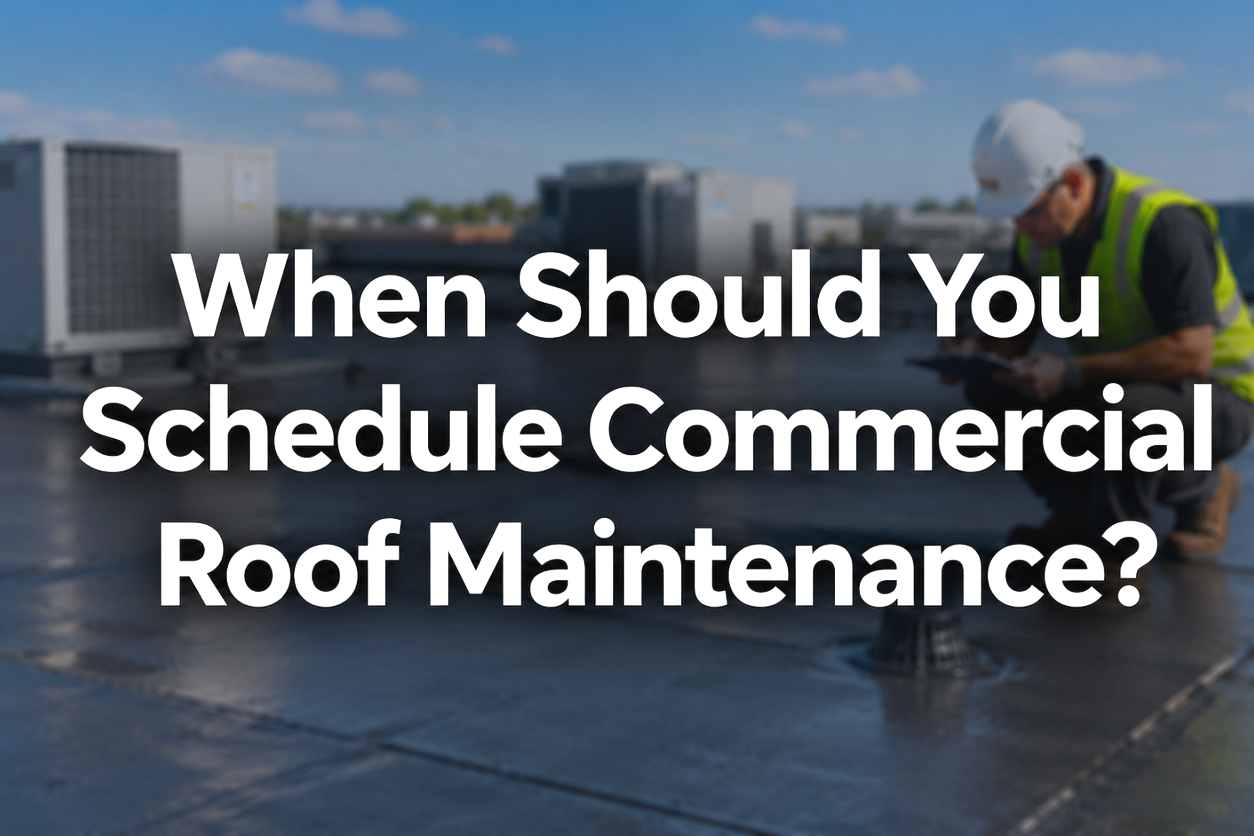
Maintaining a business facility necessitates ongoing attention to detail, particularly with regard to the shield above your head. Until a little problem turns into a significant interruption, many property owners and facility managers undervalue the significance of proactive care. You may save a great deal of time, money, and worry by knowing when to consult experts. Having a trustworthy roof maintenance schedule is essential. A regular maintenance schedule helps keep the roofing system in excellent condition and prolongs its service life.
Common Indications That Your Commercial Roof Needs Repairs
Commercial roofing systems frequently exhibit warning indicators far in advance of a significant breakdown. Early detection can save thousands of dollars in replacement or repair expenses.
Water Collecting on the Roof’s Surface
Commercial roofs that are low-slope and flat are made to drain effectively. If water stays on the roof for more than 48 hours, it might mean:
- Inappropriate roof slope
- Degraded membrane seams
- Roof scuppers or drains that are blocked
Surface Deterioration or Membrane Damage
Thermal movement and UV exposure may cause common commercial roofing systems in Raleigh, such as TPO, EPDM, and modified bitumen, to deteriorate with time.
Be mindful of:
- Separated seams
- Punctures or cracks
- Blistering or bubbling
Ceiling Stains or Interior Leaks
The first obvious indication of roof collapse in a business structure is frequent water infiltration. Keep an eye out for:
- Water stains on walls or ceilings
- Drips close to HVAC or lighting systems
- Musty smells that indicate moisture trapping
Creating the Ideal Schedule for Roof Maintenance
There isn’t a single maintenance strategy that works for all business buildings. The location of the structure, the age of the roof, and the function of the property all influence the appropriate timetable.
Schedule Inspections At Least Twice a Year
Spring and fall are the best seasons for routine maintenance for the majority of commercial structures. Any damage caused by snow, ice, or extremely cold temperatures over the winter might be found with a spring examination. Additionally, it guarantees that the roof is ready for warmer weather and seasonal precipitation. The goal of a fall inspection is different. Before winter begins, it allows maintenance crews to clear debris, evaluate flashing, check drainage systems, and finish repairs.
Increase Maintenance of Older Roofs
Regular maintenance becomes even more important when business roofs get older. Older roofing systems are more susceptible to leaks, loose seams, broken flashing, and drainage issues since materials naturally decay over time. An older roof frequently benefits from more regular assessments, although a fresh roof might simply need routine checks. Consistent maintenance can assist property owners in prolonging the roof’s functional life while making plans for future capital improvements, as opposed to waiting until replacement becomes inevitable.
Examine the Environment of the Building
The degree of wear on a roof varies. Buildings near manufacturing enterprises, construction sites, or densely forested regions may need extra care due to dust, fallen branches, and airborne debris. Similarly, roofs with frequent foot traffic or those supporting HVAC equipment should be examined more frequently than roofs with restricted access. Instead of sticking to a generic calendar, the roof care plan should be customized to the building’s surroundings to ensure that maintenance matches actual circumstances.
What Should Be Included in Preventive Roof Maintenance?
There is much more to a successful maintenance visit than just checking for leaks. To guarantee that the roofing system continues to function as intended, a complete strategy takes care of every component.
Clear Debris and Clean Drainage Systems
Over time, leaves, dirt, branches, and other debris naturally accumulate on business roofs. This debris can retain moisture, clog drains, and promote early material degradation if it is left in situ. Regular cleaning minimizes needless strain on the roofing system and guarantees that water runs off the roof effectively. In order to make sure gutters, downspouts, and drainage outlets are still clear and operating correctly, maintenance crews also check them.
Record the Conditions of the Roof Over Time
Each maintenance visit yielded important information regarding the general state of the roof. Property owners may monitor changes over time with the use of photos, maintenance records, inspection reports, and repair records. Prioritizing future repairs, keeping an eye on deteriorating materials, and identifying recurrent issues are all made simpler by this record. Better maintenance planning and budgeting are supported by thorough records rather than depending just on recollection.
Final Word!
The frequency of commercial roof inspections should take into account the features of your particular property, risk concerns, and legal requirements. For the majority of commercial buildings, a professional examination every two years is the bare minimum; however, quarterly inspections or monthly visual monitoring are beneficial for many sites. Frequent expert evaluation increases the longevity of roofs, meets insurance requirements, shows dedication to fulfilling health and safety responsibilities, and gives early notice of issues.
Our experts at Five Star Maintenance & Construction can help you understand how frequently your commercial roof needs maintenance. Call us at (419) 443-0414 to book your appointment!