It is anticipated that a business roof will function silently in the background, protecting everything underneath it without requiring any maintenance. Most property owners don’t give it much thought while it’s working. However, if an issue arises, its consequences may spread swiftly, from water damage and increased repair costs to disruptions that impact workers, machinery, and day-to-day operations. Fortunately, a lot of the most common issues with business roofs can be avoided. Let’s find out how!
Why Commercial Roofing Needs Extra Care
There are difficulties with commercial roofing systems that are uncommon for residential roofs. Comprehending these elements contributes to the explanation of why commercial roof repair necessitates specific expertise:
- Impact of foot traffic: Roofs are frequently accessed by maintenance personnel in order to service equipment. If safety precautions aren’t taken, this essential traffic may puncture membranes and hasten the deterioration of roofing materials.
- Size and accessibility: Since commercial roofs cover bigger regions, frequent roof inspections are more difficult. It takes methodical inspection to find minor holes or damaged regions.
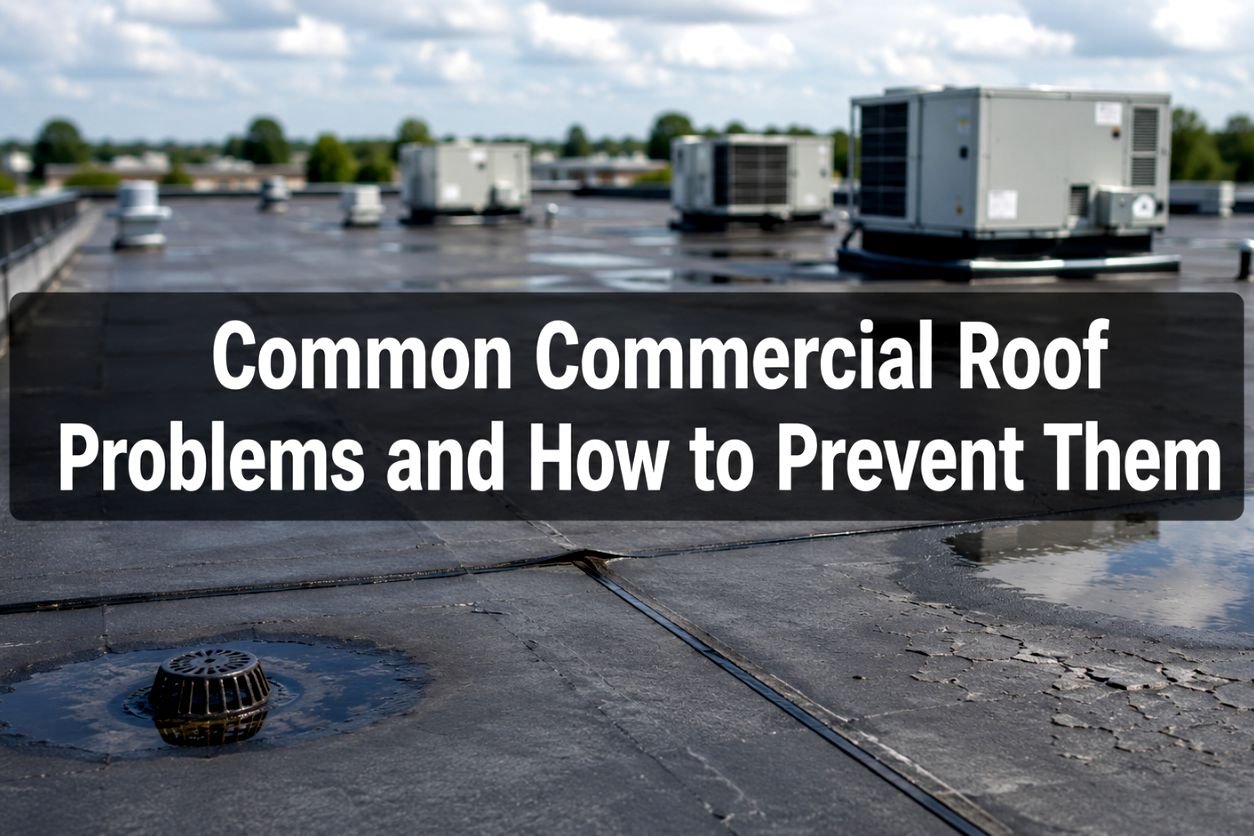
- Equipment penetrations: Solar panels, vents, skylights, and HVAC systems all provide openings for water. To stop leaks, each penetration requires appropriate flashing and routine inspection.
- Stakes for business continuity: Roof leaks cause business operations to be disrupted, sometimes resulting in closures, inventory damage, and decreased productivity while repairs are being made.
- Drainage requirements: Effective drainage systems are essential for flat roofs. To avoid standing water, commercial buildings require well-designed systems with sufficient gutters and drains.
The Most Common Issues with Commercial Roofs
Even though every structure is unique, certain roofing problems are more common than others. Property owners may address these common roofing issues before they become serious issues by being aware of them.
Water Infiltration and Roof Leaks
One of the most frequent issues with commercial roofs that property owners deal with is leaks. Roofing membrane punctures, weaker seams, deteriorating sealants, and damaged flashing are all potential entry points for water. Moisture can spread well beyond the initial site of entry once it reaches the insulation or structural deck, making the source challenging to identify. It’s important to look into warning indicators like moist ceiling tiles, musty smells, bubbling paint, or inexplicable wall discoloration rather than waiting until water drops from the ceiling.
Roof Seams and Flashing Damage
As temperatures fluctuate throughout the year, flashing around HVAC equipment, skylights, vents, parapet walls, and roof edges moves constantly. Seams may split, flashing may become loose, and sealants may break with time. Moisture can easily infiltrate the roofing system through these holes. These high-risk locations should always be carefully inspected as part of routine maintenance since fixing them early frequently averts much worse issues.
Water Ponding on Flat Roofs
Even though commercial roofs that are flat and low-slope are made to effectively drain water, drainage issues might arise over time. Water may stay on the roof long after the rainfall has stopped due to blocked roof drains, clogged gutters, uneven roof surfaces, or structural settling. Standing water causes roofing materials to deteriorate over time, adds needless weight to the building, and raises the risk of leaks. The general condition of the roof may be preserved by maintaining clean drainage systems and addressing drainage problems early.
Effective Strategies to Avoid Roof Issues
Preventing damage before it occurs is the greatest strategy to lower repair costs rather than developing better repair techniques.
Make a Regular Maintenance Schedule
Regular maintenance is important since a roof is always exposed to weather and environmental factors. Property owners should set up a maintenance routine that includes cleaning, minor repairs, seasonal inspections, and recording of the roof’s condition rather than waiting until an obvious issue arises. Regular roof maintenance keeps the roofing system in excellent operating order and makes it simpler to spot subtle changes.
Take Care of Repairs Right Away
Delaying repairs because the issue seems small is one of the most common blunders made by property owners. Building operations may not be immediately impacted by a tiny hole or broken flashing piece, but damage can grow over time due to exposure to frequent rains and temperature changes. Early commercial roof repair lowers repair costs and operating disruptions by preventing issues while they are still localized.
Maintain a Clean and Accessible Roof
Debris can lead to a number of roofing problems, even though they may appear innocuous. Leaves, branches, debris, and abandoned objects can obstruct drainage systems, retain moisture, and produce regions where degradation accelerates. In addition to enhancing drainage, routine cleaning enables maintenance specialists to conduct a more comprehensive surface inspection.
Summing Up!
Every business roof wears down over time, yet the majority of major failures start off as minor problems that should have been fixed far sooner. Instead of responding after damage has already happened, property owners may take a proactive approach by being aware of the most prevalent commercial roof issues.
Every maintenance choice makes the roofing system stronger and more reliable, whether it’s fixing broken flashing, bolstering roof leak prevention, or arranging prompt business roof repair. Reach out to our experts at Five Star Maintenance & Construction for any roof problem you may have. Call us at (419) 443-0414 to book your slot!