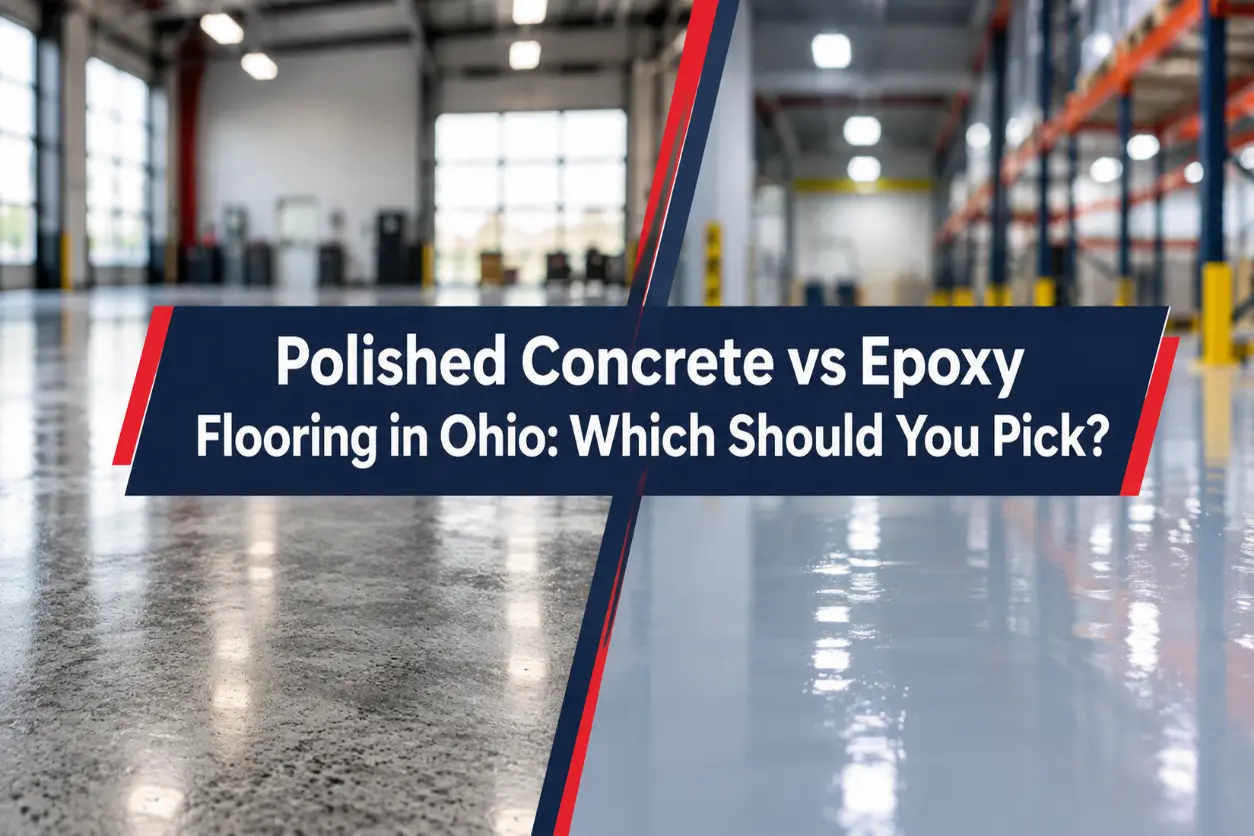
If you are comparing polished concrete vs epoxy flooring for a warehouse, shop, garage, or commercial space, you’ve probably landed on the same question as everyone else: which one is actually the better fit? Both give you a seamless, easy-to-clean floor. Both can look great. But they work differently, and the wrong choice can mean peeling, staining, or a floor that never quite suits how you use space.
The short answer: polished concrete is usually the better pick for clean, low-maintenance areas like showrooms, offices, retail, and many warehouses. Epoxy is usually the better pick where chemicals, oil, color, or safety markings matter, like garages, production areas, and workshops. The details below will help you decide.
Polished Concrete vs Epoxy Flooring: What’s the Difference?
What Is Polished Concrete?
Polished concrete isn’t a coating. Crews grind your existing slab with progressively finer diamond abrasives, apply a densifier to harden the surface, and polish it to the sheen you want. You end up with the concrete itself, just tougher and smoother. Nothing sits on top, so there’s nothing to peel. Our concrete polishing services follow this same basic process.
What Is an Epoxy Floor Coating?
Epoxy is a coating. Resin and a hardener are mixed and applied over a prepared slab, then cure into a hard, bonded layer. You can choose solid colors, decorative flakes, or metallic finishes. Our epoxy floor coating services page covers the systems we offer.
Polished Concrete vs Epoxy Flooring Comparison Chart
| Polished concrete | Epoxy flooring | |
| What it is | The slab itself, ground and polished | A resin coating over the slab |
| Look | Natural, glossy concrete | Many colors, flakes, and metallic options |
| Chemical resistance | Moderate; can stain if spills sit | Generally strong, depending on the system |
| Moisture in the slab | Handles it well | Can cause bonding problems if ignored |
| Maintenance | Occasional re-polish or reseal | Occasional topcoat in high-wear areas |
| Best for | Retail, offices, showrooms, clean warehouses | Garages, production areas, workshops |
Durability: Polished Concrete vs Epoxy Floor Coating
Honestly, both can last for years. The difference is in how they fail.
Because polished concrete is the slab itself, there’s no layer to chip or lift. Forklifts, pallet jacks, and foot traffic wear it down slowly and evenly, and it can be re-polished.
Epoxy is tougher against chemicals, but it’s a layer bonded to concrete. If the prep work was rushed, or moisture pushes up through the slab, it can peel or bubble. That’s why surface preparation matters more than the product itself, something we cover in our complete guide to epoxy floor coatings in Ohio.
Epoxy Flooring vs Polished Concrete for Chemicals and Spills
If your floor deals with oil, solvents, cleaning agents, or other harsh substances, epoxy usually wins. A sealed coating keeps spills from soaking in. Concrete, even polished and sealed, is slightly porous, and some substances can stain or etch the surface if they sit.
For plants with heavy chemical exposure, see why industrial epoxy flooring works well for manufacturing plants.
Design Options for Epoxy and Polished Concrete Floors
Epoxy gives you far more control. You can match brand colors, add safety lines, or choose a decorative flake or metallic look.
Polished concrete is more about the natural character of the slab. It looks clean and modern, but the result depends on the concrete’s age and condition. Cracks, patches, and saw cuts may still show through.
Maintenance: Polished Concrete vs Epoxy Floors
Both are simple. Sweep, damp mop, and use the right cleaner.
Polished concrete needs occasional resealing or re-polishing depending on traffic, but it never needs recoating. Epoxy may need a fresh topcoat in busy areas over time, and harsh or abrasive cleaners can dull the finish.
How Ohio Weather Affects Polished Concrete and Epoxy Floors
Ohio’s freezing winters and humid summers matter here. Moisture moving up through a slab is one of the biggest causes of epoxy failure, so a good installer tests the slab first. Polished concrete doesn’t rely on a coating’s bond, so it’s less affected.
Winter also drags road salt, slush, and de-icing chemicals into garages and entryways. Either floor can handle it when properly sealed, but a floor with good chemical resistance makes cleanup easier.
Polished Concrete vs Epoxy Flooring Cost in Ohio
There’s no single price, and the “cheaper” option depends on your building. These factors drive cost for both:
- Slab condition: cracks, pitting, or old coatings add prep time
- Size and access: big open areas are often more efficient to work in
- Finish level: higher polish levels or decorative epoxy systems cost more
- Long-term upkeep: weigh recoating epoxy against re-polishing concrete
An on-site inspection is the only way to compare real numbers.
Polished Concrete or Epoxy Flooring: Which Fits Your Space?
Polished concrete often makes sense when:
- The slab is in decent shape
- You want a clean, modern look with low upkeep
- The space is a showroom, retail area, office, or warehouse with clean traffic
- Slab moisture is a concern
Property managers choose it often for these reasons, which we explain in why Ohio property managers invest in concrete polishing.
Epoxy often makes sense when:
- Chemicals, oil, or heavy washdowns are part of daily work
- You want color, branding, or safety markings
- The floor is in a garage, workshop, or production area
- The slab is stained or uneven and you want a uniform surface
Plenty of buildings use both: polished concrete up front where customers walk, epoxy in the back where the work happens. If you lean toward epoxy, our guide to choosing the best epoxy floor coating will help you narrow down the system.
Common Mistakes When Choosing Epoxy or Polished Concrete Floors
- Skipping the slab test. Moisture and contamination cause most flooring failures.
- Choosing by looks alone. A floor must survive how you really use the space.
- Forgetting slip resistance. A glossy floor can get slick when wet, so ask about anti-slip options early.
- Going with the lowest bid. Floor prep is hard to judge once it’s covered. Use our questions to ask before hiring a commercial contractor to compare bids fairly.
Polished Concrete vs Epoxy Flooring FAQs
Is polished concrete better than epoxy flooring?
Neither is better in every case. Polished concrete suits clean, low-maintenance spaces, while epoxy suits areas with chemicals, color needs, or heavy production work.
Which is cheaper, polished concrete or epoxy flooring?
It depends on the slab and the finish. Polished concrete skips a coating but may need extra grinding if the slab is rough. Epoxy pricing varies by system. A site visit gives the clearest answer.
Which lasts longer, polished concrete or epoxy?
Both can last for years with proper installation and care. Polished concrete has no coating to wear through, while epoxy lifespan depends heavily on prep and traffic.
Is polished concrete slippery?
It can be when wet. Lower sheen levels or anti-slip treatments help, so bring it up when planning.
Which is better for a garage floor, epoxy or polished concrete?
Epoxy is often chosen for garages because of its resistance to oil, salt, and chemicals, and it offers color options. Polished concrete can work in some garages, so it comes down to how the space is used.
Can you put an epoxy floor coating over polished concrete?
Usually not directly. A densified, polished surface can resist bonding, so it typically needs to be prepared first. Ask your contractor before assuming.
Get Help Choosing Polished Concrete or Epoxy Flooring in Ohio
The best answer depends on your slab, your traffic, and what happens in the space every day. Our team installs both and can look at your floor, then recommend what fits. If the flooring is part of a larger project, our commercial construction team can handle that too.
Contact Five Star Maintenance & Construction or call (419) 443-0414 for a free estimate.