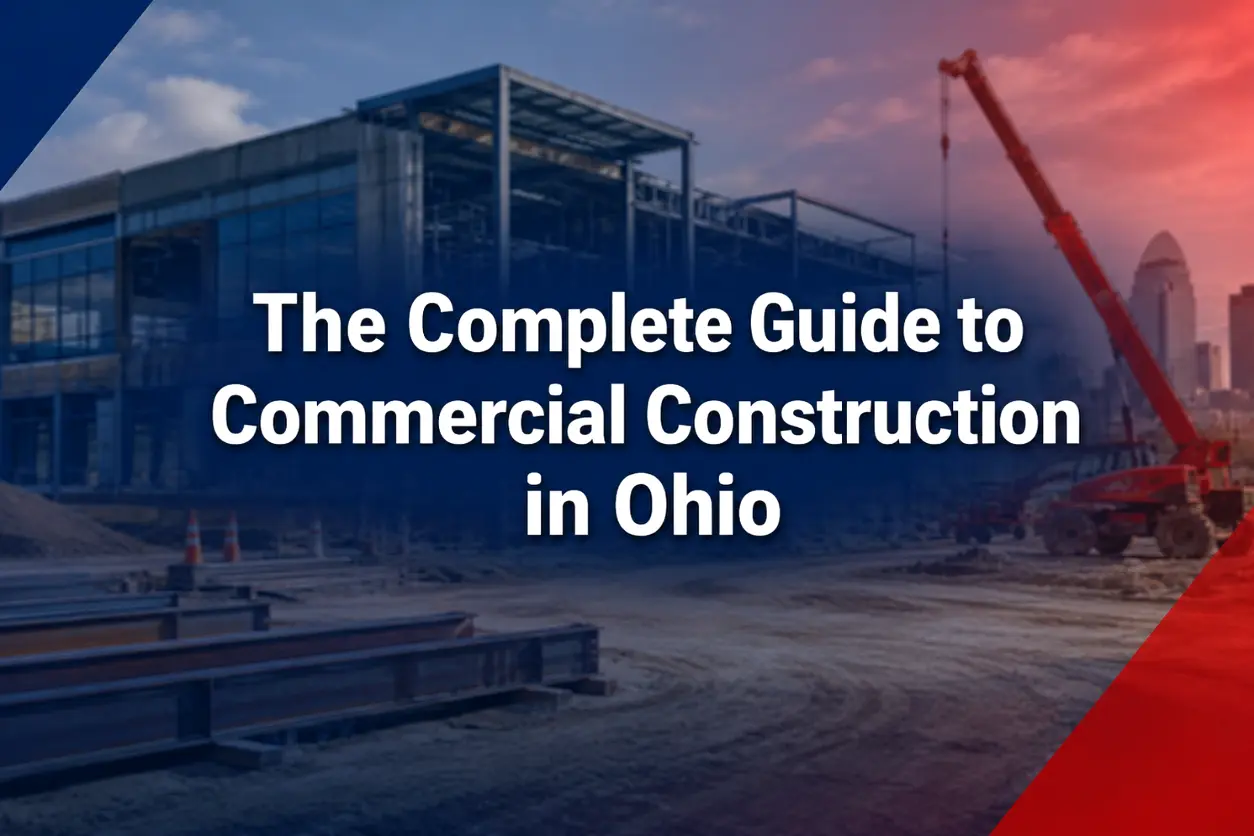
Starting a commercial building project is a big choice. Commercial construction is a multi-phase process that includes planning, design, permits, construction, and project delivery. Successful commercial construction necessitates close collaboration between contractors and owners for everything from office buildings and retail establishments to industrial facilities and large-scale developments. This article goes through the main phases of commercial building in Ohio and outlines the factors that companies should take into account at each stage.
Starting a Commercial Construction Project Correctly
Everything that comes after a project can be greatly impacted by its early phases. Establishing precise objectives and reasonable expectations in advance of construction helps avoid needless adjustments.
Purpose of the Building
Consider what the property needs to achieve before talking about materials, finishes, or floor designs. The structure should be planned with the business’s real operations in mind. For instance, an office building may need comfortable staff spaces, private rooms, technology infrastructure, and collaborative workplaces. Future needs should also be taken into account. A business could outgrow the facility in a few years even if it doesn’t now require more office space.
Right Construction Partner
One of the most important members of the project team is the contractor. A competent commercial contractor does more than just oversee employees on the working site. They assist in maintaining the project in line with its initial objectives by coordinating trades, keeping an eye on timelines, communicating with suppliers, and resolving construction-related issues.
Reasonable Construction Budget
Costs associated with construction might extend well beyond the actual building. The ultimate expenditure may be influenced by design and engineering, permits, site preparation, utilities, materials, personnel, equipment, landscaping, technology, and interior finishing.
Local Requirements
Every business construction project needs to stick to the relevant safety and building regulations. Businesses may require permits, inspections, zoning approvals, accessibility considerations, and other governmental approvals, depending on the project and region. Instead of being viewed as a hindrance once construction has begun, these criteria must be taken into account at the planning stage.
Overseeing Construction from Start to Finish
The emphasis switches to execution when planning is finished. When several crafts and activities start collaborating, careful coordination and effective communication become even more crucial.
Get the Site Ready: This might include cleaning out old structures, grading, excavation, utility hookups, drainage work, or foundation preparation, depending on the land. Further research may be necessary to ascertain whether existing commercial premises can accommodate intended renovations.
Long-Term Performance in Materials: It might be a mistake to select building materials only on the basis of initial cost or look. Commercial buildings are used for many years, thus materials should be chosen with the circumstances they will encounter in mind.
Effective Communication: Unexpected circumstances can arise in even well-planned construction projects. It is possible for materials to be delayed, for site circumstances to deviate from earlier plans, or for a design element to need to be changed. The speed at which these problems are recognized and resolved is what counts.
Various Trades: The project may involve the work of electricians, plumbers, HVAC specialists, concrete workers, roofers, painters, flooring installers, and other tradespeople. They frequently rely on one another for their job; therefore, ineffective coordination can lead to delays.
Final Inspection and Handover: The project should undergo final inspections and a thorough walkthrough prior to inhabiting the building. This is the chance to find unfinished work, aesthetic problems, operational flaws, or anything that needs to be fixed.
Future Renovations are Important
Companies evolve throughout time. Customer demands change, departments expand, equipment is updated, and technology advances. In a few years, a room that functions flawlessly now could require changes. Adaptable interior spaces, accessible utility connections, and flexible layouts can facilitate future upgrades.
Planning for change does not involve making precise predictions about how the company will seem 10 years from now. It only entails avoiding needless restrictions when there is a chance to foster flexibility.
If you wish to learn more about commercial construction, you can also read the following articles:
- How Commercial Contractors Help Businesses Grow and Expand
- What Commercial Building Services Include and Why They Matter?
Ending Note!
Strong stakeholder participation, meticulous planning, and disciplined execution are all necessary for the commercial building process. When properly managed, it produces high-performing, safe, and useful commercial environments that promote long-term value and company objectives. From pre-construction to final handover, owners experience confidence, control, and clarity when they work with an experienced partner like Five Star Maintenance & Construction.
Call us at (419) 443-0414 to book your slot!